
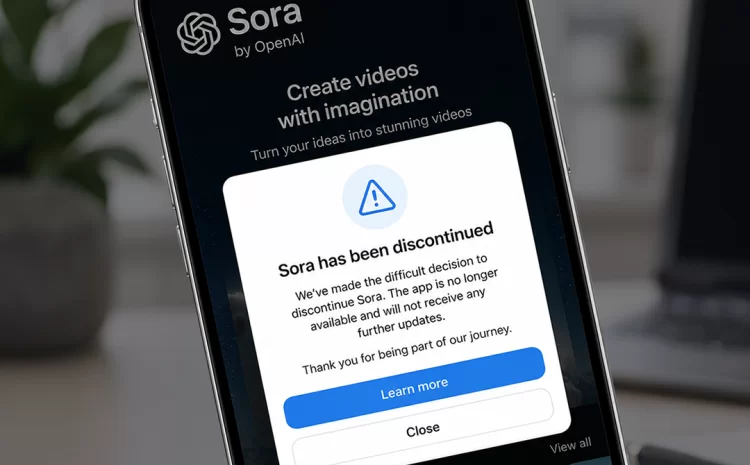
What Sora’s Shutdown Means for AIO Strategy in 2026
Posted on: May 12, 2026
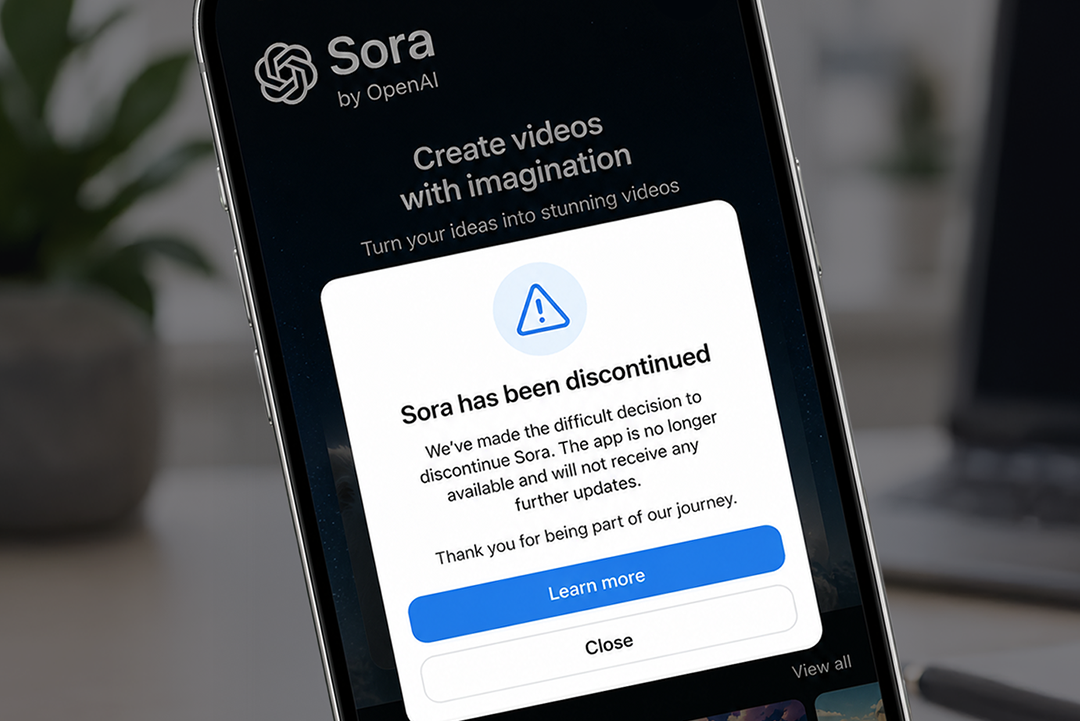
Nobody expected OpenAI to pull the plug on Sora this quickly.
Just months after launching to genuine excitement, and weeks after announcing what looked like a landmark deal with Disney, OpenAI quietly shut down the standalone Sora app. Disney ended its partnership with OpenAI, which had included plans for the media conglomerate to take a $1 billion stake in the company. The deal that was supposed to show the world how AI and Hollywood could work together collapsed before a single dollar changed hands.
If you caught the headlines, you probably moved on quickly. But if you work in marketing or content strategy, there is a bigger question sitting underneath all of this: what does it actually mean for how we use AI to create content, and where does that leave AIO strategy?
What Actually Happened
Sora launched in late 2024 to genuine excitement. The quality of its text-to-video output surprised a lot of people, and for a while it looked like it could reshape how brands produce video content at scale. Then reality caught up.
According to market intelligence firm Appfigures, Sora’s US App Store downloads fell 32% month-on-month in December 2025, and dropped a further 45% in January 2026, reaching 1.2 million cumulative installs. Sustained usage never materialised. But the usage drop was only part of the story.
From almost the moment Sora launched, it attracted serious legal and reputational heat. Users quickly discovered they could generate videos featuring recognisable celebrities and copyrighted characters. OpenAI initially operated on an opt-out basis, meaning rights holders had to actively request their likenesses be excluded rather than OpenAI proactively preventing unauthorised use. That approach did not go down well. Studios, talent agencies, and creator groups pushed back hard. When OpenAI tightened the guardrails in response, users started running into content violation errors that made the tool frustrating to use for entirely legitimate purposes. The platform found itself squeezed from both sides, and the engagement drop that followed made the economics impossible to justify.
The shutdown covers both the consumer app and the web-based platform used by professionals. OpenAI said it will reallocate resources towards robotics and autonomous software systems. More broadly, the company is pivoting firmly towards agentic AI and enterprise tools, the kind of recurring, higher-margin business that supports a path to profitability, rather than consumer products that are expensive to run and difficult to monetise. Sora was a casualty of that shift.
The Disney side of things made the story sting a bit more. Disney learned of the Sora shutdown less than an hour before the public announcement, a stunning breach of business etiquette that reportedly strained the relationship between the two companies. A partnership that could have set the template for how entertainment companies engage with generative AI evaporated overnight, without warning and without a single dollar having moved.
The Reality Check AIO Needed
Here is the thing that makes this more than just a tech news story: the whole premise behind Sora, and behind a lot of AI content tools, was that AI could produce unlimited, high-quality content cheaply and at scale. Give it a prompt, get something usable back. Repeat indefinitely. That assumption is breaking down, and the Sora shutdown makes it very visible.
The constraints are not technological. They are economic, legal, and reputational, and they are tightening across the board. Running a consumer AI video platform at scale costs a lot of money. Deepfake and IP risks are live and growing, as the Seedance 2.0 crisis from earlier this year demonstrated. And platform standards, both from search engines and from AI systems themselves, are getting stricter about what they will surface and cite.
Taken together, AI content is proving to be constrained in ways that the early hype did not account for. Cost, risk, and platform standards are shaping what is actually viable, and that has direct implications for anyone building a content strategy around AI output.
What Does This Mean for Your AIO Strategy?
AIO, or artificial intelligence optimisation, is about making sure your content gets cited when AI platforms generate answers for your audience. And the lesson from Sora, sitting alongside everything else that has happened in AI content this year, is that the shortcut many teams were banking on is not as reliable as it looked.
Content built for AI Overviews needs something that could not have been assembled by a machine alone. A local data point, a specific client example, a genuine editorial position, and a first-hand observation rooted in real expertise are the signals that make content citable rather than skippable. Research found that AIO-cited articles contain 62% more factual statements than non-cited ones, and crucially, the most-cited factual statements are original data that cannot be found elsewhere. Content assembled from summarising what already exists is simply not competing for those citation slots.
A volume-first approach to AI content is a visibility risk. If your publishing strategy leans heavily on generating large amounts of AI output with minimal human enrichment, you are producing content that AI platforms are actively learning to deprioritise. Google’s March 2026 core update targeted content that failed to demonstrate genuine expertise, original insight, or real user value. AI-assisted content that includes human verification and firsthand expertise holds up fine. Content that does not, regardless of how quickly it was produced, does not.
And the tools themselves are less permanent than they might seem right now. Sora had a million downloads in its first week and a billion-dollar studio partnership. Six months later it was gone. Building your entire content workflow around any single AI platform without a fallback is a real risk, and the past few months have made that very concrete.
For Singapore marketers and content teams, this means treating AI as a starting point rather than a finished product. Local context, real expertise, and content that is clearly written for a specific person with a specific question: these are the things that hold up regardless of what the tools around them do.
Leaving You With This
The tools are genuinely useful. Nobody is saying stop using them. But Sora’s shutdown is a good reminder that they are also evolving fast, constrained by economics and legal pressure, and subject to sudden changes in direction that nobody outside the company sees coming.
What does not change is the value of content that is genuinely useful, clearly authored, and written for a real person with a real question. For Singapore marketers and content teams, that means leaning into what AI cannot replicate: local context, real expertise, and a point of view that is distinctly yours.
AI can help you get there faster. It just cannot get you there on its own.