
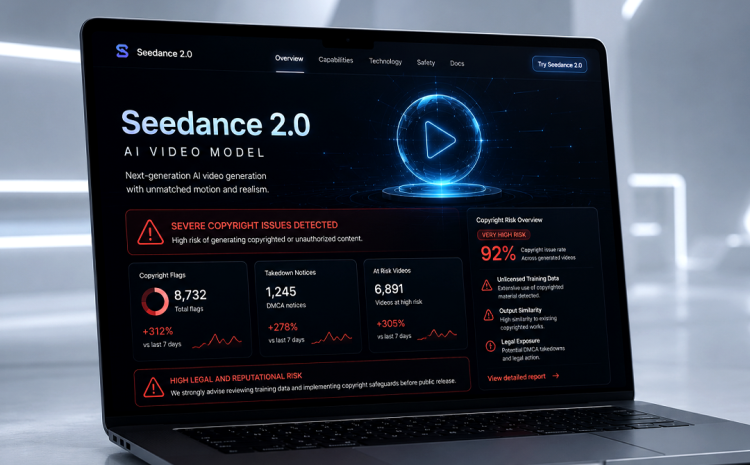
What’s Next for AIO After the Seedance Controversy
Posted on: May 8, 2026
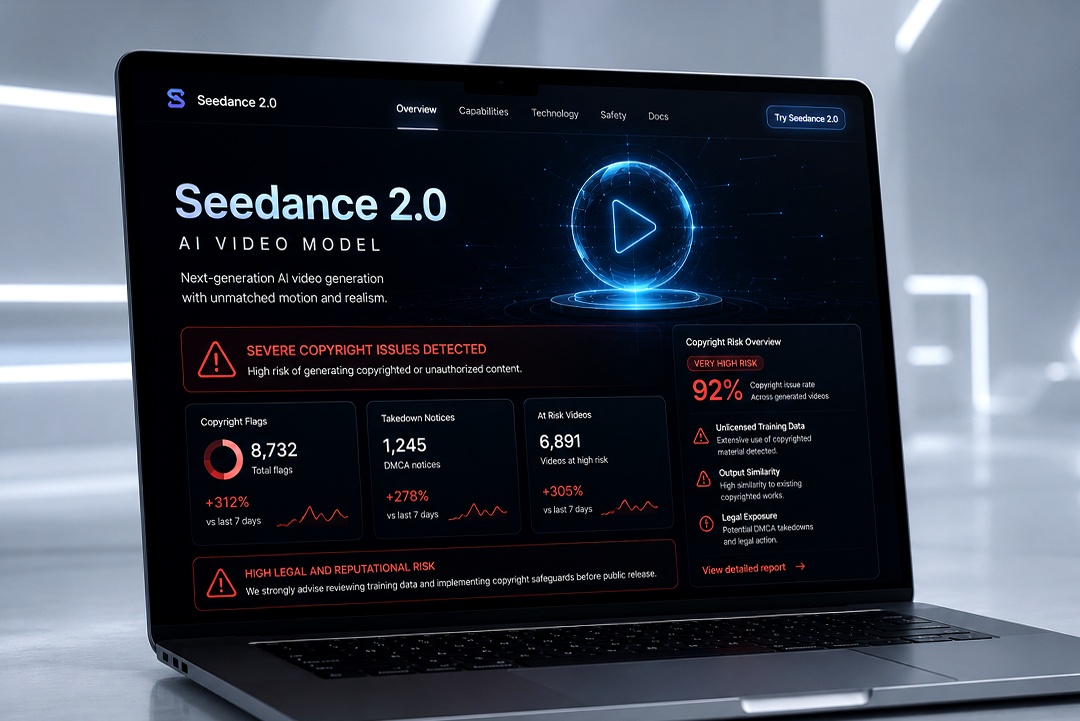
If you have ever sat at your desk wondering whether AI is making your content better, or quietly making it riskier, you are not alone. A lot of marketers, business owners, and content creators are asking the same thing right now. And a recent piece of news out of ByteDance has made that question even more pressing. The Seedance 2.0 AI video model was meant to be one of the most exciting AI video tools of the year, and the company’s sudden decision to hit pause has people in the industry talking, worrying, and rethinking how they use AI in their day-to-day work.
So let us walk through what happened, what it means for you, and what you can actually do about it.
A Quick Catch-Up, Then the Update
When this story first started making the rounds, there was a lot of excitement around the launch, but also a fair number of question marks. The short version is that ByteDance had not given much clarity on how it planned to handle the copyright concerns being raised, and a lot of people in the industry were quietly waiting to see what the company would do next.
Well, the update is here, and it is not the answer most expected.
According to Reuters and the South China Morning Post, ByteDance has reportedly suspended the public rollout of the model after copyright disputes from creators and rights holders piled up. The company is said to be reviewing how its training data was sourced before deciding what to do next.
If you are publishing content for a living, this is one of those moments worth slowing down for.
Why You Should Care, Even If You Are Not in Tech
You might be thinking, “I am not building AI models. Why does this affect me?” Here is the simple answer.
Most of us in Singapore use AI in small, everyday ways. Maybe you ask ChatGPT to draft a blog post. Maybe your team uses an AI tool to whip up images for Instagram. Maybe you record a Zoom meeting and let AI summarise it. All of that is content. And all of that content has to come from somewhere.
When a model the size of Seedance gets paused because of how its training data was gathered, it tells us something bigger. The whole pipeline, from the model right down to the post you publish, only works if you can trust where it all came from. If the foundation is shaky, your output is too.
This is exactly why people are talking more about AIO, or AI Optimisation. Think of it as the next chapter after SEO. It is about creating content that AI tools, search engines, and real human readers all feel safe trusting and sharing.
Provenance Sounds Boring. It Is Actually Your New Best Friend
Provenance is a fancy word for “where did this come from and who touched it along the way.” It is becoming one of the most important things you can build into your content workflow.
The Infocomm Media Development Authority (IMDA) has been pushing this idea hard through frameworks like AI Verify Foundation, which helps companies show that they are using AI responsibly. The message is simple: Regulators, platforms, and customers want to know how your content was made.
If you want to keep things practical, here are a few habits worth picking up:
- Note down which AI tools your team uses for which jobs
- Keep a short record of who reviewed and edited each piece
- Be upfront when AI played a big role, especially in video and images
- Avoid AI tools that cannot tell you where their training data came from
It may not be glamorous work, but it is the kind of behind-the-scenes care that protects your reputation when, not if, the next AI controversy hits.
AI Is Already Filtering Out the Lazy Stuff
Here is the part that surprises people the most. Search engines and AI tools are getting really good at spotting low-effort, copy-paste AI content, and they are quietly pushing it down the rankings. Google has been talking about “helpful, people-first content” for a while now. Tools like ChatGPT, Perplexity, and Gemini also tend to favour sources that feel original, expert, and human.
So, if your blog reads like it was generated in 30 seconds with no edits or no first-hand experience, it might just disappear into the digital void. Worse, too much of that kind of content can drag down the trust score of your whole website.
Here is a simple way to look at how things are shifting:
| What Matters | A Few Years Ago | Right Now |
| Keywords | Hugely important | Still useful, but not the main thing |
| Backlinks | A top ranking factor | Helpful, but quality is everything |
| Originality | Nice to have | A must |
| Provenance | Hardly thought about | Quickly becoming central |
| Human expertise | A bonus | Pretty much expected |
The brands publishing the loudest may have done well a few years ago. But as of right now, the ones doing well are those that are publishing what only they can honestly say.
What This Looks Like for Singapore Brands
Singapore has been quick to embrace AI. A recent Straits Times report on local enterprise tech showed that AI use has grown sharply across marketing, customer service, and operations. That is wonderful. It also means more of us could get caught out if we are not careful about how we use these tools.
If you want a small starting list:
- Have a quick chat with your team about which AI tools are being used and for what
- Add a human pair of eyes to everything before it goes live
- Start a simple log of who made what, with which tool, and when
- Lean into your own people. Interview your team, share your own data, talk about local stories
- Bookmark resources from GovTech Singapore and Smart Nation Singapore so you can keep up with local guidance
A huge team or a big budget is not really needed for this. Instead, you just need to be a little more thoughtful than you were six months ago.
The Bigger Takeaway
The ByteDance pause is a sign that the wild, anything-goes phase of AI content is winding down. From here on, the brands that win will be the ones that put care, honesty, and a bit of human warmth back into what they publish.
For Singapore brands, this is genuinely good news. We live in a market that respects quality and trusts good reputations. That fits beautifully with the kind of content AI systems are starting to reward. The question is not “How much can I produce with AI?” It is “How can I make content that real people, and the AI tools they use, will trust?” Answer that, and AIO will start feeling like an opportunity.