
AI vs Human Marketing: Who’s The Real Winner in 2026?
Posted on: April 16, 2026
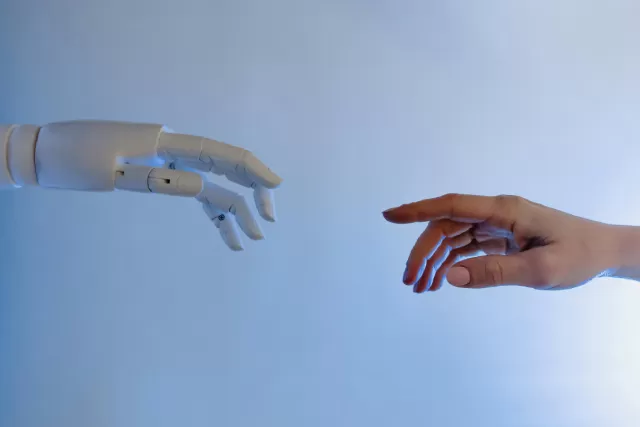
Walk through Raffles City on any given weekday, glance at the dynamic digital displays, or simply scroll through your feed on the MRT. It’s hard to ignore just how deeply Artificial Intelligence has embedded itself into everyday life in Singapore. By 2026, AI has become the environment that marketing happens in.
For business owners and anyone working with a digital marketing agency in Singapore, this raises a question that’s becoming harder to sidestep: as algorithms become more capable of predicting what a consumer wants before they even know it themselves, what does that leave for the human marketer? In the race for brand loyalty and trust, is efficiency or empathy winning?
The Efficiency Shift: Why AI is Dominating the Scale
There is no denying that AI has won the battle for speed. In Singapore’s economy, the ability to process data at scale is a massive competitive advantage.
We see this most prominently in our financial sector. DBS CEO Piyush Gupta recently highlighted the reality of this shift, noting that AI could effectively replace roles equivalent to 4,000 temp staff at DBS alone. This reflects how capable modern systems have become at handling what once demanded thousands of man-hours, from backend logistics to front-facing customer interactions.
On the technical side, advances like Google’s Nano Banana architecture have pushed AI processing directly onto devices, making hyper-personalised, data-heavy marketing experiences near-instantaneous. For businesses, this translates to “right time, right place” marketing at a precision and scale that simply wasn’t possible a few years ago.
The Human Counter-Narrative: Augmentation Over Replacement
While the job replacement headlines can be daunting, the most successful Singaporean companies are using AI to augment their people, not just replace them. They are focusing on an approach that prioritises the customer experience.
1. Retail with a Heart (FairPrice Group)
Look at FairPrice Group. In their more advanced outlets, they’ve integrated AI to manage inventory and floor tasks. However, instead of reducing headcount, they have focused on upskilling. Over 1,600 cashiers have been retrained as “Digital Ambassadors.” Their new role? Helping less tech-savvy shoppers navigate smart-carts and apps. This recognises a fundamental truth: a machine can scan a grocery item, but it takes a human to offer a helping hand and a friendly smile to a senior citizen.
2. Service Excellence (Singapore Airlines)
Singapore Airlines (SIA) offers perhaps the clearest example of technology being used to elevate human service rather than thin it out. Through a landmark collaboration with OpenAI, SIA is integrating multimodal GenAI solutions capable of interpreting text, audio, and even video to support both customers and staff.
As Mr George Wang, Senior Vice President of Information Technology at SIA, has put it, the goal is to enhance operational efficiency and staff productivity to elevate the end-to-end customer experience. By using AI to automate routine processes and provide guidance on complex operational tasks (like flight crew scheduling or troubleshooting), SIA empowers its employees to make quicker, better-informed decisions. What’s left is more time and mental space for the kind of high-touch, genuinely attentive service that has kept SIA at the top of its industry for decades. The “Singapore Girl” isn’t being replaced. She’s being freed up to do what no algorithm can replicate.
The Singapore Heartbeat: What Data Alone Can’t Capture
You can feed an AI all the data in the world, and it will still struggle with the texture of local life. Marketing in Singapore is deeply tied to cultural nuances that a machine might miss:
- Trust and Reliability: Deepfakes and AI-generated content have made Singaporeans more alert to inauthenticity, not less. Brands that feel grounded and consistent are earning a kind of loyalty that no amount of personalisation can manufacture. Human marketers remain the gatekeepers of that credibility.
- Cultural Nuance: While AI can translate languages, it takes a human to know when a campaign should feel homegrown vs international. AI doesn’t understand the shared nostalgia of a kopitiam on a Sunday morning, or the specific hopes of a young family moving into their first BTO flat.
- The Kiasu Psychology: A machine knows how to create a “limited time offer.” A local marketer knows how to frame a value proposition so it feels like a genuine lobang (a great opportunity) rather than a high-pressure sales tactic.
The Real Winner: The Hybrid Strategy
In 2026, the real winner isn’t AI or Human, it is the Hybrid Marketer. The brands winning the most market share in Singapore today are those that use AI to handle the data-heavy maths while empowering their human teams to handle the meaning. They are taking advantage of government initiatives like SkillsFuture and IMDA’s GenAI Sandbox 2.0 to ensure their staff are AI-literate but human-led.
A few practical principles worth applying:
1. Automate for Speed, Not Soul: Let AI handle your A/B testing, data reporting, and technical SEO. Reserve your people for the work that requires judgment and relationship.
2. Invest in Digital Ambassadors: Like FairPrice, use tech to free up your staff so they can focus on building actual relationships with your customers.
3. Audit for Authenticity: Always have a human sanity check on AI content. It’s easy for machine-written copy to feel clinical or, worse, slightly off in ways that locals notice immediately.
Conclusion
The verdict for 2026 is clear: AI has won the battle for efficiency, but humans have won the battle for connection. And as automation becomes the norm rather than the exception, the human touch has quietly become something closer to a premium, a signal of quality that cuts through the noise precisely because it’s rarer.
The real winner isn’t the brand with the smartest algorithm or the most charismatic team. It’s the brand that uses the machine to be smarter, but uses its people to be better.