
Google’s AI Overviews Now Cite Beyond Your Rankings
Posted on: September 3, 2026
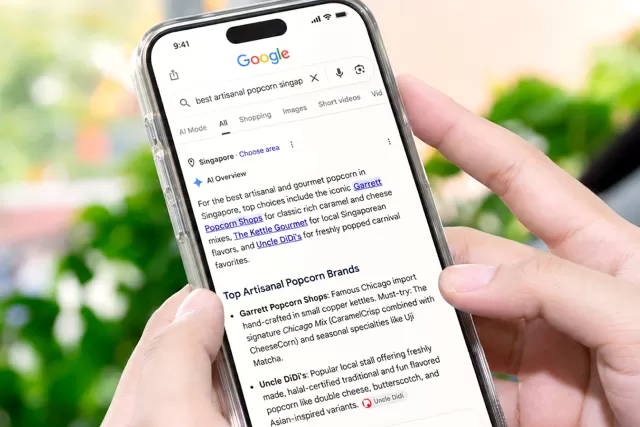
For years, the advice was simple: rank in the top 10 and the clicks would follow. That link has been quietly fraying, and Google’s own AI Overviews are the ones pulling it apart. Fresh citation data from mid-2026 shows that a page sitting at position seven can now out-cite the page sitting at position one, which turns a decade of conventional SEO wisdom on its head.
Google AI Overviews now appear on nearly half of all US search results, with informational and question-based queries triggering them as often as 64% of the time. That scale alone would justify attention. What makes the update genuinely newsworthy is how differently these overviews are choosing their sources compared to even a year ago, and what that means for AI SEO as a discipline in its own right.
What actually changed
Only 38% of AI Overview citations now come from pages ranking in the traditional top 10, down sharply from 76% a year earlier, according to Ahrefs’ analysis of AI Overview citation patterns. The rest split almost evenly between results sitting between positions 11 and 100, and pages that do not appear in the top 100 organic results at all. Google has also rolled out a handful of visible changes to how AI Overviews present those citations: links now sit inline next to the specific sentence they support instead of bundled at the end, desktop users can preview a linked page before clicking through, and news publishers and social media creators get clearer, more prominent credit than a generic blue link.
The mechanism behind the citation shift appears to be what researchers call query fan-out. Rather than pulling only from the results for the exact phrase someone typed, Google’s AI system expands the original question into a cluster of related sub-queries, then draws citations from whichever pages perform best across that broader set. A page that never ranks well for the head keyword can still surface repeatedly across the fan-out and earn a citation the traditional ranking report would never have predicted.
Why this reshapes GEO strategy
This is precisely the kind of update that separates conventional SEO from Generative Engine Optimisation. Where SEO optimises for a single query and its ranking position, GEO has to account for the entire cluster of questions a topic might generate, because that cluster, not the headline keyword, is what the AI system actually evaluates before deciding what to cite.
In practical terms, that means content built around one narrow keyword is increasingly fragile, while content that maps out an entire topic, complete with the follow-up questions a reader would naturally ask next, tends to perform far better. YouTube citations have also grown roughly 34% over the past six months as a non-ranking source, a reminder that a GEO strategy confined to blog posts and landing pages is only covering part of the surface these systems now draw from. This fits a pattern we have flagged before: not long ago, Chinese AI models hit a 46% share of global usage almost overnight, and the lesson then was the same as it is now, that visibility is spreading across more sources, not consolidating around fewer of them.
Inline citations and hover previews also change the commercial value of a citation. When Google’s own framing describes this update as an attempt to prove AI Overviews “can send you traffic instead of taking it,” in the words of one industry breakdown of the changes, it is effectively acknowledging that trust in AI-driven answers depends on publishers seeing some return. Early data referenced by SEO analysts suggests traffic that does arrive via an AI citation converts several times better than average organic traffic, since the reader has already had their initial question answered and is clicking through with genuine intent, not idle curiosity.
What this means for Singapore SMEs
The temptation is to chase a single ranking number and assume the job is done. That approach is now measurably less reliable. Singapore SMEs competing for visibility in categories like renovation, financial services, or F&B delivery should instead build out topic clusters that answer the obvious follow-up questions a customer would have, instead of publishing one page per keyword and moving on.
Structured, well-labelled content still does the heaviest lifting: clear headings phrased as questions, concise answer paragraphs near the top of each section, and schema markup that helps establish authorship and expertise. It is also worth publishing a wider mix of content formats, since video and forum-style discussion are both proving to be legitimate citation sources in their own right, not just supplementary channels. As with most SEO work, these changes do not produce results overnight. Expect the groundwork to take a few months to show measurable movement, with the fuller payoff building over six to twelve months as more of a topic cluster gets indexed and evaluated together.
A few practical starting points for marketing managers reviewing this internally:
- Map every “money page” against the three or four follow-up questions a customer would ask next, and make sure each has a clear, well-structured answer somewhere on the site.
- Check whether your best-performing topics have a supporting video, since AI systems are increasingly pulling citations from platforms beyond the standard web results.
- Revisit older blog posts that rank reasonably but have never been restructured with clear headings and upfront answers, as these are often the easiest wins.
The businesses that treat their content as a genuinely comprehensive resource on a topic, not a collection of keyword-targeted pages, are the ones set up to benefit as AI Overviews keep looking further afield for the best answer rather than simply the highest-ranked one.
The ranking report will still tell you plenty, but it is no longer the whole story, and treating it as such is how visibility quietly slips away without a single position dropping.