
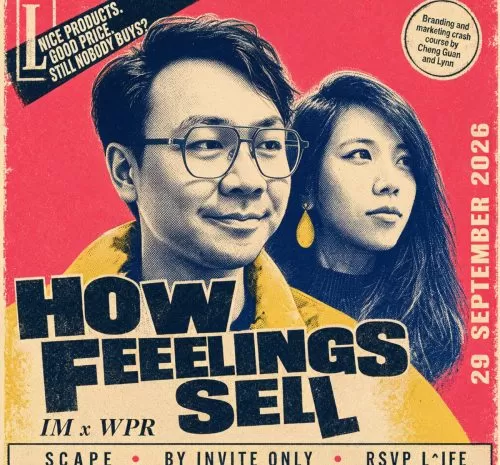
How Feelings Sell: Recap of IM x WPR Workshop at *SCAPE
Posted on: October 22, 2026
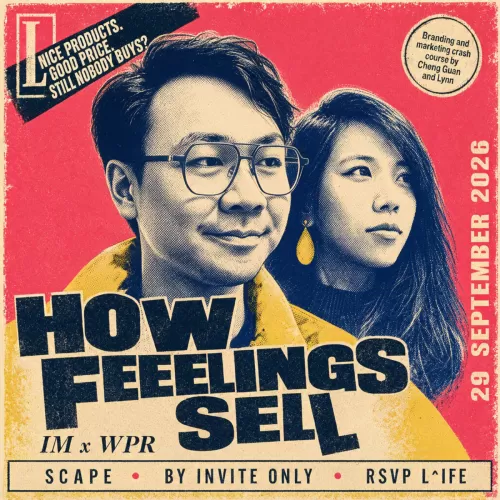
If that line sounds familiar, you are not alone. On 29 September 2026, our Head of Growth, Lynn Goh, joined Cheng Guan, Director of WPR, as co-speaker at How Feelings Sell, a branding and marketing crash course hosted by L^IFE for retailers on Level 1 of *SCAPE.
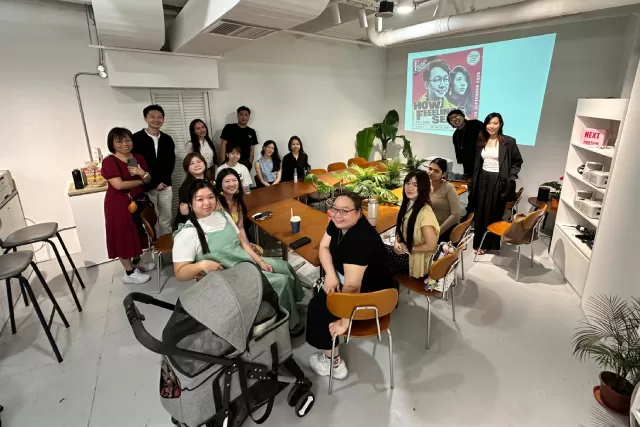
The session was closed-door and invitation-only. That made room for honest conversation about the one problem every bricks-and-mortar business feels: getting people through the door, and turning that footfall into sales.
A room full of real retail challenges
The attendees came from a wide mix of industries: fine jewellery, children’s gifts, creator platforms, home décor, signature scents and more. Different products, but a shared set of questions.
- How do we get more people to walk into the store?
- How does slower footfall show up in our day-to-day revenue?
- What should we actually be posting online to bring customers in?
The format kept things practical. Short presentations from both speakers were followed by an interactive brainstorm, where business owners worked through their own challenges with the speakers and with each other.
Meet the speakers
Cheng Guan, Director, WPR
Cheng Guan leads WPR, where he helps brands craft content that connects with what their customers feel.
Lynn Goh, Head of Growth, Impossible Marketing
Lynn leads growth at Impossible Marketing, helping businesses stay visible as search shifts to AI, through GEO, SEO and grant-supported digital marketing.
Cheng Guan: content that sells starts with how your customer feels
Cheng Guan, Director of WPR, explored the question at the heart of the workshop: “What are you really selling?” His answer: customers rarely buy the product alone. They buy the feeling it gives them.
His segment broke this down into four ideas:
- Find the feeling. Identify the emotional benefit your product delivers, such as confidence, belonging, reassurance or the pleasure of giving a thoughtful gift.
- Turn it into a brand promise. Connect that feeling to a clear promise, back it with credible proof, and make sure the customer experience delivers on it.
- Bring the promise to life. Creators, customer relationships and communities can carry that promise further than a brand can on its own.
- Use AI with audience insight. AI-generated content can help, but it is only useful when it starts from a clear understanding of who you are selling to.
The takeaway for retailers: a good product and a fair price are the starting line, not the finish. The brands that win know which feeling they sell, and prove it at every touchpoint.
Lynn Goh: your customers are searching differently now
Lynn shifted the focus from what you say to where customers find it. Search is changing fast. More and more people now get answers from AI rather than scrolling through a list of links.
She walked the room through the main places this is happening:
- Google AI Overviews, the AI-generated summaries that now appear above many Google search results
- ChatGPT, Gemini and Claude, AI assistants people increasingly ask for recommendations, such as where to buy a gift or which brand to trust
For retailers, this matters. If a shopper asks an AI assistant for “a unique jewellery shop in Singapore” and your brand is not part of the answer, you may never get the chance to compete.
What is GEO?
Lynn introduced Generative Engine Optimisation (GEO): the practice of making your brand easier for AI engines to find, understand and recommend. Where SEO helps you rank on a search results page, GEO helps you show up inside the AI-generated answer itself.
She shared practical strategies businesses can start with, including:
- Publishing clear, helpful content that answers the questions customers actually ask
- Keeping business information accurate and consistent across your website and listings, which also supports local SEO for nearby shoppers
- Building credibility through reviews, mentions and trusted third-party sources
Funding support: the EDGE grant
Lynn closed the session with good news: you do not have to fund all of this alone. The EDGE Digital Marketing Grant (formerly PSG) helps Singapore businesses adopt pre-approved digital marketing solutions such as AI SEO, SEO, Google Ads, social media marketing and content marketing.
It is not only for small businesses. Both SMEs and larger companies can apply:
- SMEs: up to 50% grant support
- Non-SMEs, including large companies: up to 30% grant support
To qualify, a business must be registered and operating in Singapore, have at least 30% local shareholding, and use the solution in Singapore. Applications go through the Business Grants Portal and must be submitted before any work starts or payment is made.
Key takeaways for retailers
- Know what you are really selling. Customers buy feelings such as confidence, belonging and reassurance, not just product features.
- Back the feeling with proof. A clear brand promise needs credible proof and a customer experience that delivers on it.
- Search has moved into AI. Customers are asking Google AI Overviews, ChatGPT, Gemini and Claude for recommendations.
- GEO is the new visibility game. Make it easy for AI engines to understand and recommend your brand.
- Support is available. Grants like EDGE can lower the cost of getting started.
A big thank you to L^IFE and *SCAPE for hosting, to Cheng Guan and the WPR team, and to every business owner who came ready to share and brainstorm.
Want to know how your brand shows up in AI search? Get in touch with Impossible Marketing to talk about GEO, content strategy and how the EDGE grant could support your next move.