
Google’s New AI Search Ads: The GEO Rethink You Need
Posted on: June 15, 2026
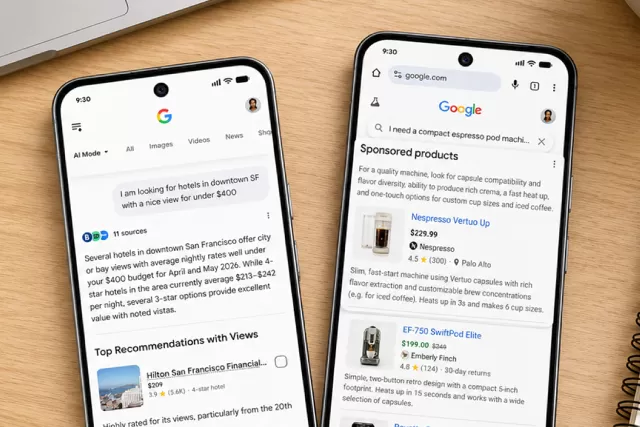
For most marketers, GEO (Generative Engine Optimisation) has been filed under “organic strategy.” It’s the discipline of making sure your brand shows up in AI-generated answers — in ChatGPT, in Google’s AI Overviews, in Perplexity. The paid side of search? That stayed familiar: write copy, set bids, optimise for clicks.
Google’s announcements at Google Marketing Live 2026 make that separation harder to maintain.
The new AI ad formats launching in Google Search aren’t a refresh of what already existed. They’re built on Gemini, designed for AI Mode, and they work on a fundamentally different logic. Understanding that logic and what it demands from your strategy is the rethink this moment calls for.
What Google’s New AI Ad Formats Actually Do
A quick recap of what was announced, because the details matter here.
Conversational Discovery ads appear inside AI Mode responses and answer a user’s specific question using ad creative tailored to that query. Not a generic headline. A Gemini-generated response built around what that person actually asked. If someone searches “I want my home to smell like a spa without buying ten different things,” your ad doesn’t show up as a banner. It shows up as an answer.
Highlighted Answers let highly relevant ads surface within AI Mode’s recommendation lists — the same lists Gemini generates when someone asks for “the best language app for a trip to Tokyo.”
AI-powered Shopping ads go further still. Gemini pulls your most relevant products and writes a custom explainer for why a specific product suits that specific search. The copy isn’t yours anymore. It’s AI-generated, in real time, for each individual user.
Business Agent for Leads replaces the static lead form with a live chat experience inside your ad. A prospective student can ask your university questions and get answers drawn from your website, before they ever land on a page.
Each of these formats has something in common: Gemini is making creative decisions. Not your team. The AI is deciding what to say, how to say it, and whether your brand is even a relevant match for the query at all.
This Is Where GEO Enters the Paid Conversation
GEO, in its original framing, is about making your content credible and legible to AI systems so they choose to surface it in generative answers. The signals that matter: entity clarity, authoritative citations, structured data, consistent brand presence across the web.
Sound familiar? It should. Because the same signals that determine whether Gemini cites your brand in an AI Overview are now the signals that determine whether Gemini includes your product in a Conversational Discovery ad, or selects you as a Highlighted Answer.
The distinction between organic and paid is blurring at the AI layer. Gemini doesn’t look at your budget and decide to write compelling copy. It looks at your product data, your brand signals, and the quality of what you’ve put into the system — and makes a decision from there. A generous ad spend with poor product feed quality, weak entity signals, and vague positioning will produce weak AI-generated creative. Possibly no creative at all.
That’s the rethink. Paid search has always rewarded relevance, but the bar for what “relevant” means has just been raised significantly.
The New Input Is Data, Not Copy
One of the clearest shifts in AI Mode ad formats is where creative input moves. With traditional search ads, the marketer writes the headline, the description, the call to action. With Conversational Discovery ads and AI-powered Shopping ads, the marketer supplies the raw materials — product attributes, USPs, offer details, structured data — and Gemini builds the creative.
This isn’t a reason to deprioritise creative thinking. It’s a reason to apply it differently.
The question is no longer “what’s the best headline for this campaign?” It’s “what information does Gemini need to represent this product accurately and compellingly?” Your product descriptions, your schema markup, your pricing data, your reviews, your unique positioning — these are the new creative brief.
Brands that have invested in clean, structured, semantically rich product and service data will see that investment compound here. Brands that relied on clever copywriting to compensate for thin product information are about to find that compensation harder to engineer.
GEO for Paid: What It Actually Looks Like
The practical question is what changes in how you work. A few areas worth prioritising:
- Product and service data quality is now a creative asset
If Gemini is generating explainers about your products, the quality of those explainers depends entirely on the quality of your product feed. Review your structured data, your attribute completeness, your schema implementation. Treat it like the creative brief it has become.
- Entity clarity matters beyond organic search
Your brand needs to exist as a well-defined, consistently represented entity across the web — not just on your own site. Mentions in authoritative industry contexts, consistent NAP data, Wikidata presence where relevant: these build the trust signals that inform Gemini’s decisions across both organic and paid contexts. The GEO gap is real — 44% of SaaS brands don’t appear in AI-generated answers at all, purely because these signals aren’t in place.
- Offer construction is a GEO signal
The Direct Offers expansion — which lets brands surface promotion bundles directly inside AI Mode responses — adds another layer. Gemini matches your promotions to specific search contexts. The clearer and more structured your offer data, the better the match.
- Lead formats need rethinking too
Business Agent for Leads works best when your underlying website content is rich, organised, and genuinely answers the questions your prospects ask. The AI draws answers from your site. A site full of vague brand language will produce a vague agent. Specific, well-structured content produces a useful one.
The Budget Question
None of this means your budget doesn’t matter. Performance Max and AI Max for Search are still the recommended foundations for accessing these new formats, and campaign structure and bidding strategy remain important levers.
But the ceiling on what your budget can achieve is now set by your GEO fundamentals, not your CPCs. Two brands with identical spend will get dramatically different results if one has clean entity signals, rich product data, and authoritative brand presence, and the other doesn’t.
That’s a different conversation than the one most paid search teams are used to having with their SEO counterparts. It might be worth starting it now.
What to Do Before These Formats Roll Out Widely
Google has flagged that several of these formats are in testing, with broader rollout in the months ahead. That creates a window.
Audit your product and service data against the structured formats Gemini will use. Not just for schema compliance, but for depth — are the attributes that would make your product a compelling match for a specific query actually present?
Map the queries your customers use in AI Mode. These differ from traditional search queries. They’re longer, more personal, more specific. Your content and product data need to be ready to answer them.
Build your brand’s entity presence across the web. This takes time and compounds slowly. The work you do now will influence what Gemini knows about your brand when it constructs AI ad creative in six months.
Review your Direct Offers setup. If you’re in e-commerce or travel, the native checkout integration and promotion bundling features represent a meaningful opportunity to get in front of high-intent users at the exact moment they’re evaluating options.
The Bigger Picture
Google Marketing Live 2026 confirmed something that’s been building for a while: the search results page is no longer the primary interface between your brand and your audience. Gemini is.
That changes what paid search fundamentally is. It’s not a bidding war for a position on a page anymore. It’s a signal competition for inclusion in an AI-generated response. The brands that win that competition are the ones that have made themselves legible, credible, and specific enough for an AI model to choose them — whether in an organic answer or a paid placement.
GEO was always going to become central to search strategy. Google’s new AI ad formats are just the confirmation.